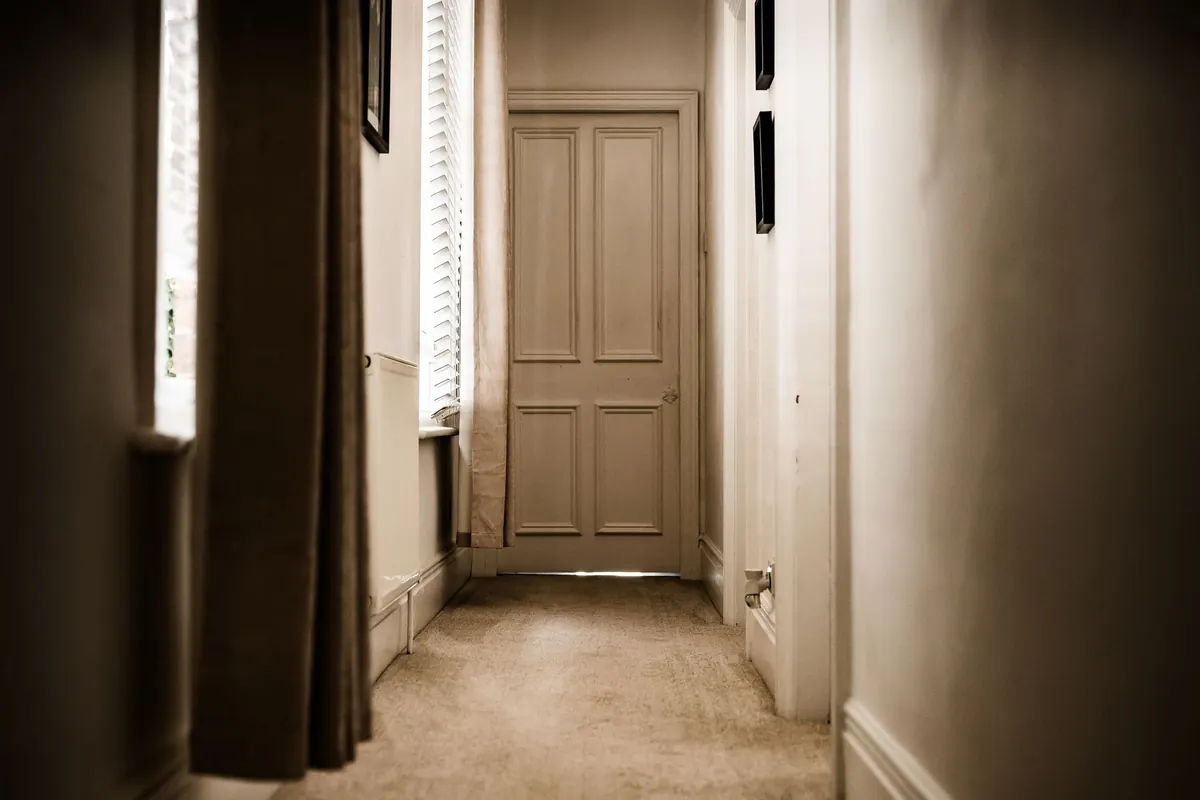
Curtains or blinds? Put two decorators in the same room and you will get two confident, opposite answers. The truth is that the right choice depends far less on taste than on the window itself: how it opens, which way it faces, how much heat you want to keep in, and who is standing in front of it in a towel. Here is how the decision usually falls, room by room, in the sorts of houses most of us actually live in — Victorian terraces with bays, 1930s semis with generous sashes, and new-builds with neat tilt-and-turn frames.
Before you fall for a fabric, measure the opening and work out how the window opens. A sash that slides up and a side-hung casement that swings inwards cause very different problems. Face-fitted blinds on an inward-opening casement or a tilt-and-turn frame will foul the handle and the glass, so you either fit inside the recess or leave clearance for the swing.
Recess depth matters too. Period homes often have deep reveals that happily swallow an inside-mounted roller or Venetian blind, with room left for a short café curtain below. Modern windows sit closer to the wall, which usually means face fitting or an outside-mounted roller with a neat fascia. Bay windows need their own plan: a bent track with two or three curtain panels, or one blind per section, measured individually because bays are rarely square.
Then look down. If a radiator sits under the window, decide early whether your curtains will finish above it or drop past it. Fabric draped over a working radiator traps heat where you do not want it and gets grubby on the reverse.
Answer these honestly and the shortlist becomes obvious:
The living room asks for flexibility, which is why a layered approach usually beats a single solution. A sheer roller or voile panel handles daytime privacy without killing the light, while full curtains drawn at dusk make the room feel finished and hold warmth against the glass.
Curtains also soften sound in a room full of hard surfaces — wooden floors, plaster walls, a telly in the corner — which is a small but real comfort in a terraced house. Choose a heading that suits the room: eyelet curtains on a pole feel modern and casual, while pencil pleat or pinch pleat on a track reads dressier. Floor-length panels add formality; sill-length is friendlier in a snug or a room with a busy floor.
If a bay makes full curtains awkward, Roman blinds in each section give you the shape of curtains with far less fabric to wrestle. Add a second pair of hands when measuring; bay angles catch everyone out.
Bedrooms are where curtains quietly win. Blackout-lined curtains, ideally interlined for weight and warmth, cut early summer light and take the edge off a cold sash window. They also absorb sound, which matters more than most people expect in a room facing a main road.
Blinds alone tend to leak light around the edges, particularly at the top where the fabric meets the bracket. If you prefer a blind, pair a blackout roller fitted inside the recess with curtains outside it, or add a pelmet to cap the gap. For children's rooms, choose cordless, spring-loaded or cleat-fixed options and keep any looped cords high and out of reach — cord safety is worth taking seriously rather than working around.
One practical note: curtains should clear the floor by a centimetre or so, or puddle deliberately. Anything in between always looks like a measuring error.
Steam, grease and cooking smells make fabric a poor bet near a hob or sink. A wipeable roller blind is the simplest answer, and an aluminium or faux-wood Venetian gives you something better still: slats you can angle to bounce light onto a worktop while cutting glare. Keep long Roman blinds and trailing curtains away from the cooker, and if you have patio doors, vertical blinds or a wide roller cope with the width better than a single heavy curtain. Whatever you choose, check it can be wiped or vacuumed with a brush attachment, because kitchen blinds collect a fine film you will not notice until it is thick.
Bathrooms are humid, often small, and frequently overlooked. Waterproof rollers and faux-wood Venetians shrug off condensation; fabric Romans and heavy curtains in a poorly ventilated shower room will eventually spot and smell. If mould keeps returning, treat the ventilation as the real problem rather than covering the window with something thicker, and seek professional advice if damp is persistent — it is usually a building issue, not a decorating one.
Frosted glass plus a simple blind is often all a small bathroom needs. In a cottage or period bathroom, a café curtain on a short pole still looks charming and lets steam escape above it.
Once the practical choice is made, the styling is straightforward. Lining does the heavy lifting: standard lining for looks, blackout for sleep, thermal or interlined for draughts. In small rooms, match curtains or blinds to the wall colour and the window all but disappears; in a large, plain room, a bolder pattern gives the eye something to hold.
Think about the scale of the pattern against the size of the window. A large repeat swallows a narrow sash window whole. And do not forget the hardware: a decent pole, well-fixed brackets and a track that runs smoothly are what stop an inexpensive pair of curtains looking cheap.
Work through it in order. Note how the window opens and how deep the recess is. Decide what the room needs most — privacy, darkness, warmth or wipe-clean practicality. Take the simpler option first: blinds in kitchens and bathrooms, curtains in bedrooms and living rooms, then add a layer if the budget allows. Measure the width and the drop twice, allowing for overlap in the middle and a little extra at each side so the fabric clears the glass when closed. Live with your first room for a week before ordering for the rest of the house. It is far easier to repeat a decision you have already tested than to correct one you made for four rooms at once.
Photo: William Bradshaw / Pexels
How to give a rental flat real style using removable wallpaper, freestanding furniture and plug-in lighting — plus...
Cool, grey north light can leave a room feeling flat. Here is how colour, layered lighting, mirrors and warm...
The common layout mistakes that shrink compact UK lounges, from wall-hugging sofas to undersized rugs, and the...

Curated motifs and decor for every home.